
How to Break Out of the Pentatonic Box (And Actually Sound Musical)
This guide is the follow-up to the pentatonic scale on guitar, which covers the formula and all five positions. Once you know the shapes, this is how to connect them into one scale across the neck.
The pentatonic box has a peculiar hold on intermediate guitarists. Most know there are other positions — they've looked them up, watched the videos, maybe memorised the diagrams. Then they pick up the guitar and return, almost magnetically, to fret 5. The problem isn't laziness. It's that they were taught a shape when they needed a map.
Why the Box Feels Like a Cage
The box delivers results immediately. Within an afternoon, most beginners can sound plausibly musical over a minor backing track — and that's genuinely useful. But the way it gets taught creates a trap.
When the brain learns a shape, it encodes position: these five frets, these six strings, here. It doesn't encode what note is where, why the shape works over minor chords, or how it connects to anything else on the neck. The result is a player who moves confidently within the box but can't make deliberate choices outside it. Which note is the root? The b3? The 5th? Unknown. So the solo wanders and hopes it resolves.

Position 1 — the box most guitarists start with, and many never leave
The fix isn't more shapes. More shapes in the same conceptual framework produces more boxes, not more freedom. What's needed is a different framework entirely.
Intervals: What's Actually Inside the Shape
Every pattern on the guitar — the box, a barre chord, a blues lick — is a collection of intervals in space. Strip away the shape and what remains is a set of distances between notes. Those distances don't change with key or position. They can't.
The minor pentatonic contains five: root, b3, 4, 5, b7. A minor third (b3) is always 3 frets up the same string. A perfect fifth is one string over and two frets forward — three frets forward when the shape crosses from the G string to the B string. Once these shapes are internalised as physical distances — not as dots on a diagram — they become findable anywhere on the neck without memorising a new pattern.
Five intervals — identical relationships in every position, every key
This is the shift that unlocks everything else: from memorising shapes to reading relationships. The positions don't need to be memorised once you can see what's inside them.
Five Positions — One Scale, Seen Five Ways
There are five pentatonic positions because there are five notes in the scale. Each position starts on a different one of those notes and covers a different area of the neck. Together they tile the entire fretboard without gaps or overlaps — almost.
Here's what most players are never told: adjacent positions share notes. Position 1 and Position 2 share a note on every string: the higher note of position 1 on each string is the lower note of position 2. That overlap isn't a coincidence. It's the door between rooms, and once you've found it, the five positions stop feeling like five boxes and start feeling like one continuous scale seen from five starting points.

E shape — inside position 1
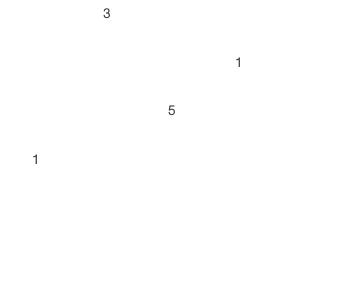
D shape — inside position 2

C shape — inside position 3
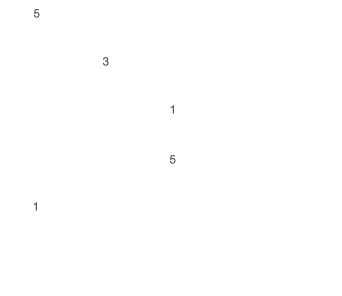
A shape — inside position 4
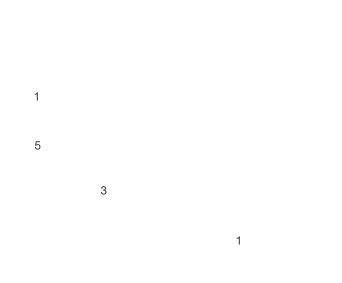
G shape — inside position 5
In A minor: play Position 1 slowly. Find the notes where it meets Position 2 on the top two strings. Slide up into Position 2 using those shared notes as the bridge. Repeat into Position 3, then 4, then 5. The entire neck, crossed in one key, without leaving the scale.
One transition at a time. Don't move to the next until the current one feels inevitable, not memorised.
CAGED: A Fretboard Address for Every Chord
The five pentatonic positions aren't arbitrary — each one maps directly onto one of the five CAGED chord shapes. Position 1 sits inside the Em-shape barre chord. Position 2 inside the Dm shape. Position 3 inside the Cm shape. The pattern continues across the neck.
The consequence is significant. When improvising over a chord progression, a guitarist isn't just in a key — they're near a specific chord at a specific part of the neck. Knowing which CAGED shape that chord makes immediately identifies which pentatonic position contains the most consonant notes: the chord tones, root, 3rd, and 5th. The scale and the chord share the same physical territory.
The Em chord shape
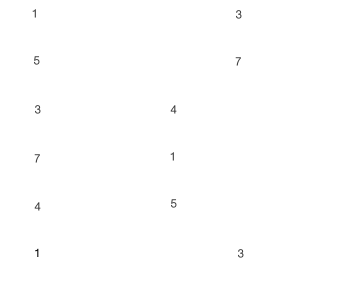
Its pentatonic position
This is why staying near the chord always sounds more musical than wandering across the neck. It's not instinct — it's geometry. CAGED makes that geometry explicit.
Triads: Where the Solo Stops Wandering
Connect all five positions and you can still sound like you're running scales. What separates a solo from a scale exercise is landing on chord tones — deliberately, at the right moment. Triads are how it's done.
A triad is three notes — root, third, fifth — on three adjacent strings. Small, moveable, and immediately musical because you're playing the chord beneath you. Every CAGED shape contains one. Every pentatonic position sits around one.
The three-string triad inside the C shape — root, 3rd, 5th on adjacent strings
When the backing chord changes, land on the nearest triad for that chord. It doesn't require a full strum — even striking root and third together as a phrase resolves signals the harmony clearly. The scale fills the motion between destinations; the triad marks the destination itself.
Every triad has three inversions and sits on every set of three adjacent strings. Once connected to CAGED positions, there's a chord-tone anchor available anywhere on the neck. The solo stops wandering. It starts going somewhere.
Three Drills for Crossing Positions
Connecting positions is a physical skill as much as a mental one. These three drills build it directly, and each takes five minutes.
The one-string walk. Pick a string and play every note of A minor pentatonic on it from the 5th fret to the 17th, up and back, naming each note. On the low E string that's A, C, D, E, G, A. You're moving through all five positions in a straight line, and the shapes start to look like slices of one long pattern.
The two-position phrase. Start a short phrase in position 1 and finish it in position 2, crossing on a shared note with a slide. Then reverse it. Do the same for each neighbouring pair in turn.
The root chase. Play a backing track in A minor and land on a different A every four bars, moving up the neck: low E string 5th fret, D string 7th, A string 12th, G string 14th, low E string 17th. Each landing point drags you into a new position.
Four Weeks. One Key. The Whole Neck.
Week 1 — Map the positions. All five pentatonic shapes in A minor, from the diagrams in the pentatonic scale guide. No connecting yet — just know where each one lives.
Week 2 — Find the doors. The overlap notes between each adjacent pair. Cross from one position to the next using only those shared notes. Slow. One transition per session.
Week 3 — Overlay CAGED. For each position, identify the chord shape it surrounds. Play the Am chord in that shape, then improvise in the surrounding scale position. Let chord tones ring when they appear.
Week 4 — Add one triad anchor per position. Root-position triad inside each CAGED form. Use it as the landing point when the chord changes.
After four weeks in A minor, move to a new key. The shapes are identical — only the starting fret changes. Within three months, the logic that works in one key works in all of them.
One Neck, Not Five Boxes
The box isn't the problem. The absence of context around it is.Intervals explain what's inside each shape. The five positions show the scale covers the whole neck. CAGED gives every chord an address.Triads give every position an anchor.
These four things aren't separate topics — they're four views of the same fretboard. Learn them together and the isolated boxes dissolve. What's left is one continuous instrument.
Pentatonic box FAQs
Why do my pentatonic solos sound boring?
Usually because the phrases run up and down the shape without landing anywhere. Aim each phrase at a note of the current chord, leave space between phrases, and repeat ideas rather than adding more notes. Moving into a second position helps too, because it changes which notes fall under your fingers.
How do I move between pentatonic positions?
Use the notes the two positions share. Each position's upper note on a string is the next position's lower note, so you can slide from one into the other on any string. Practise one pair of positions at a time until the change happens without thinking.
How long does it take to learn all five pentatonic positions?
Learning the shapes takes a few weeks of short daily practice; connecting them so you can move freely takes longer. The four-week plan in this guide is a realistic start in one key, after which the same shapes work in every other key.